
Light in Interior Design

Article
Light in Interior Design
The same room, with the same furniture and materials, can become two completely different spaces under two different lighting schemes: one warm and inviting, the other cold and unwelcoming. Light is an invisible "material", yet it decides how we see and feel every other material.
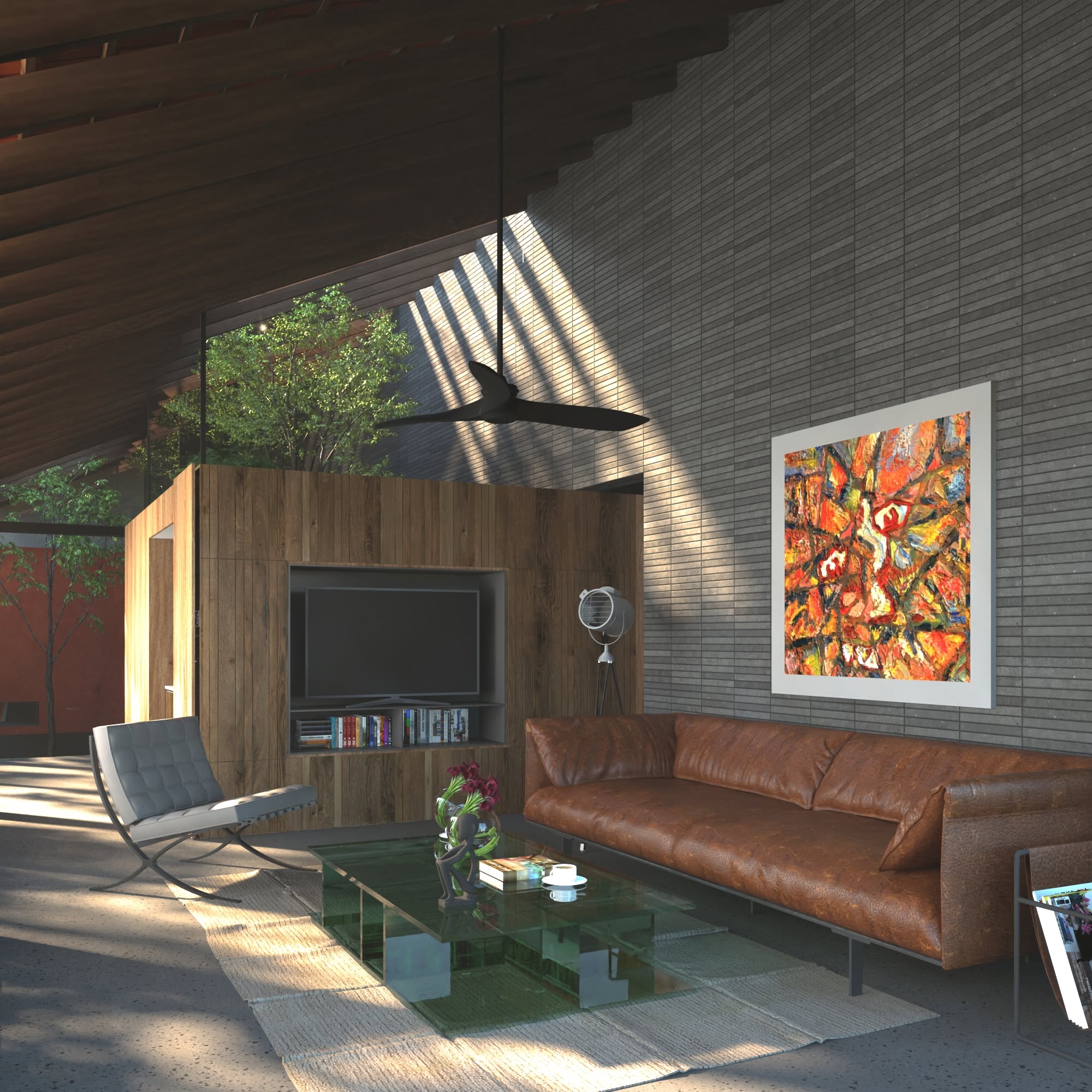
What is lighting in interior design?
Lighting design is the organisation of natural and artificial light so that a space is bright enough for daily life while also creating mood and rhythm. It is not just choosing fixtures, but deciding where light comes from, where it falls, how strong or soft it is, how warm or cool, and how it changes through the day.
The role of light
- Function: enough light to cook, read and work without eye strain.
- Shaping space: light can make a ceiling feel higher, a room wider, or draw a large room into a cosy corner.
- Revealing materials: timber grain, stone and textured plaster only come alive when grazed by light that shows their texture.
- Mood: warm light helps us relax; neutral light helps us focus.
- Health and circadian rhythm: daylight keeps us alert; soft, warm light in the evening helps the body prepare for sleep.
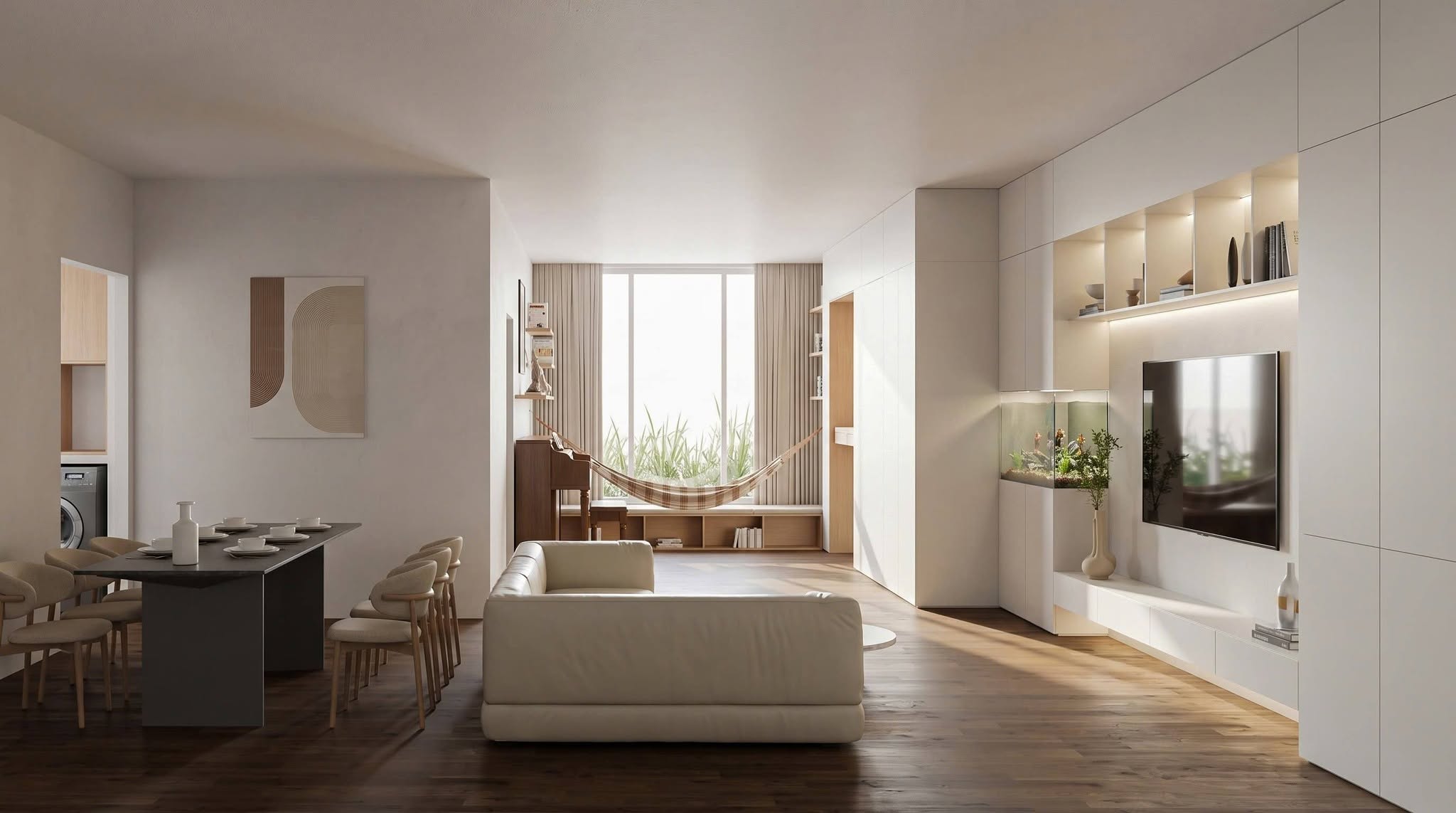
Start with daylight
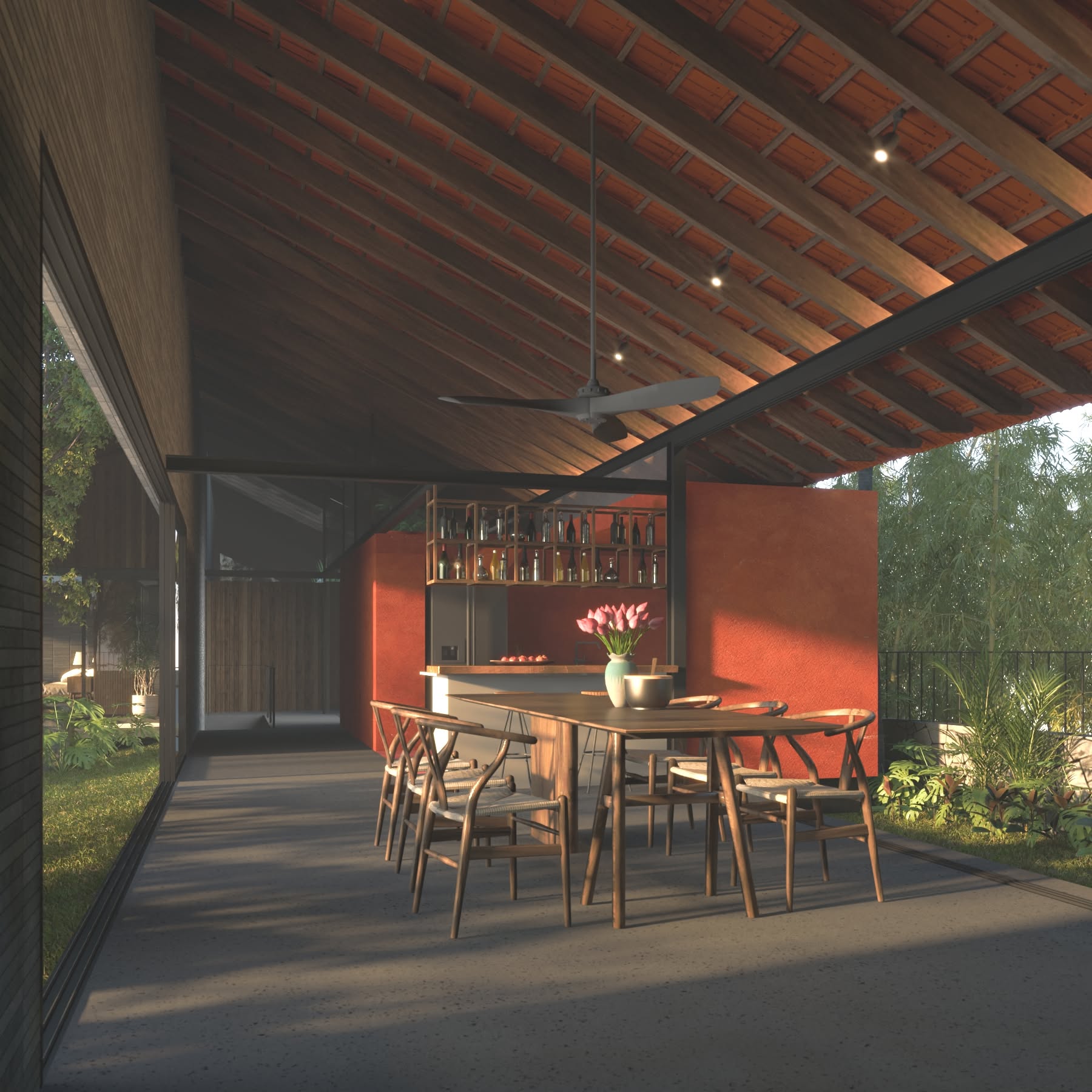
In a tropical climate, daylight is both a gift and a challenge. H+ Studio favours light wells, roof slots and large openings onto the garden, combined with deep eaves, timber louvres and wide verandas to bring in indirect light while keeping out harsh sun. Light filtered through louvres and leaves creates moving patterns of light and shadow – a layer of decoration that needs no objects at all.
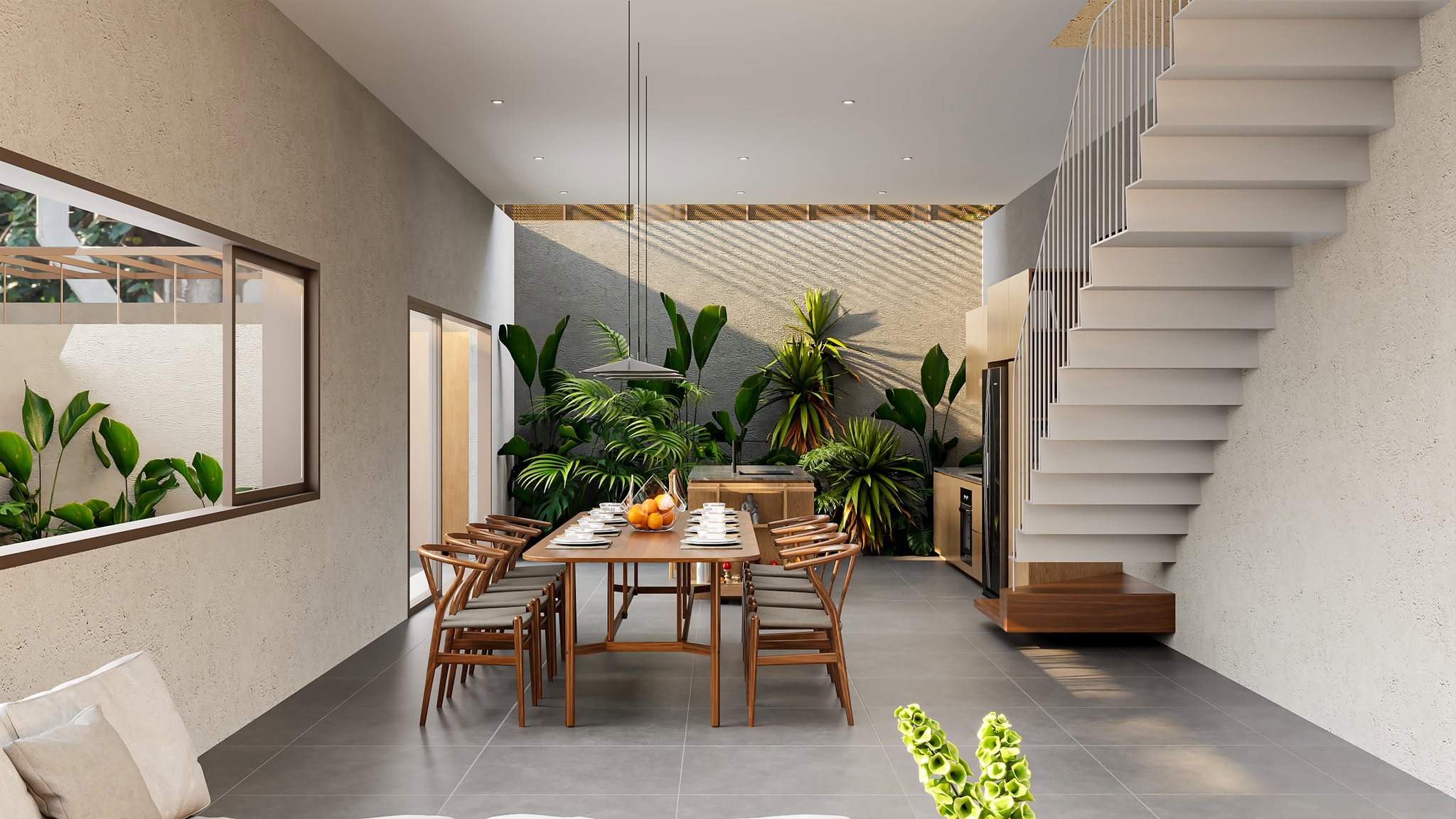
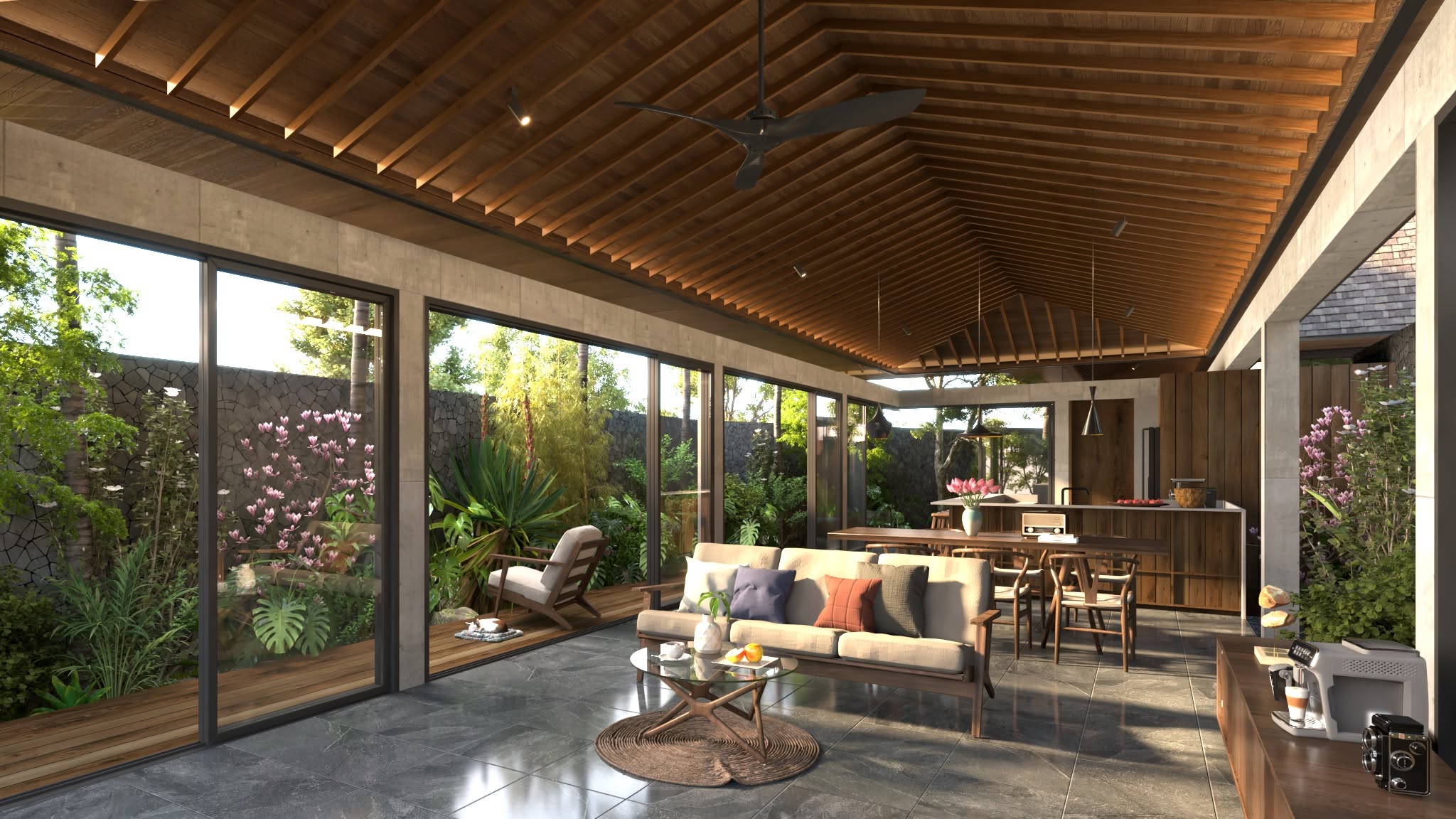
Four layers of artificial light
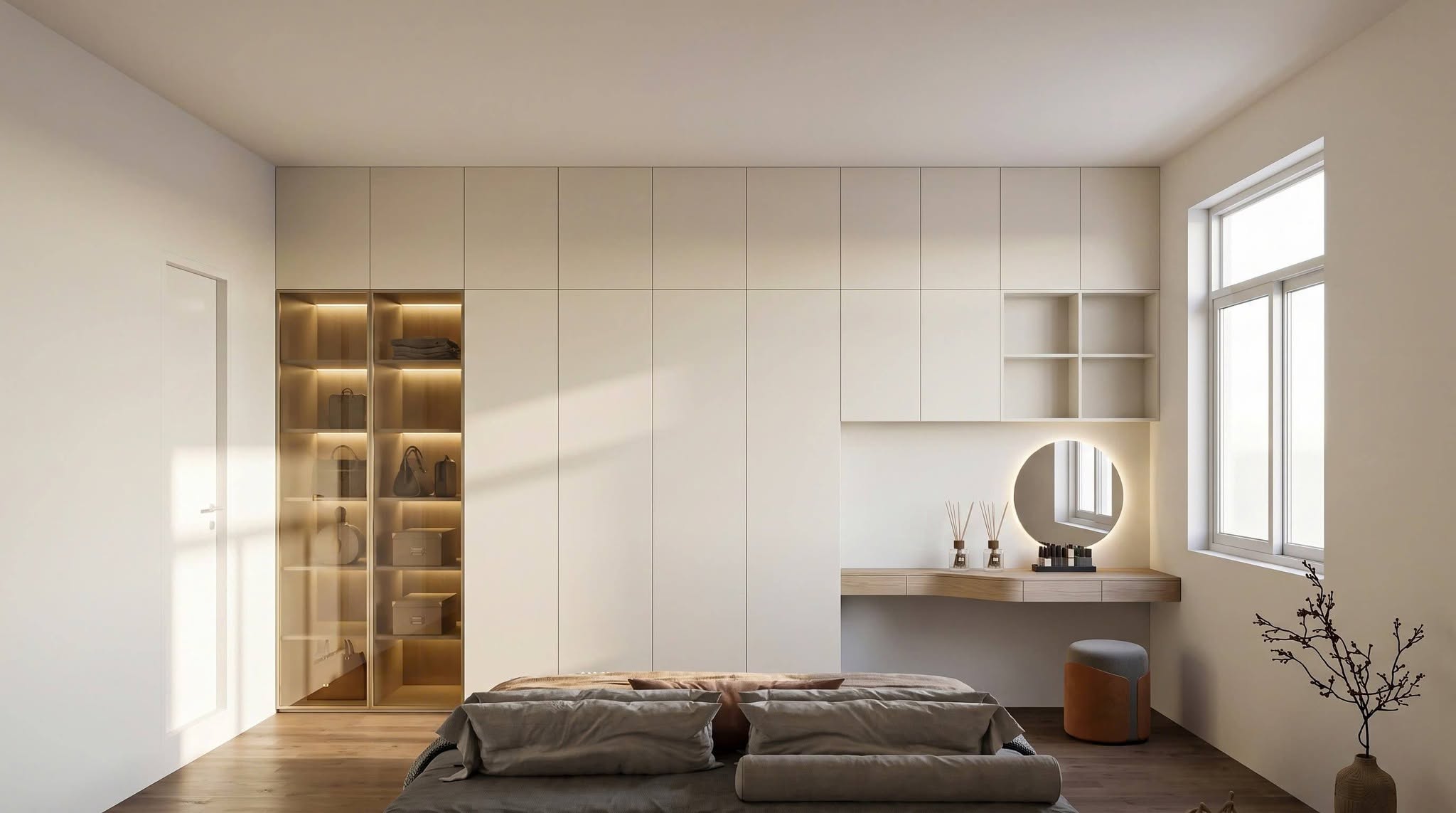
- Ambient light: even, soft general lighting – recessed downlights, cove lighting, wall washers.
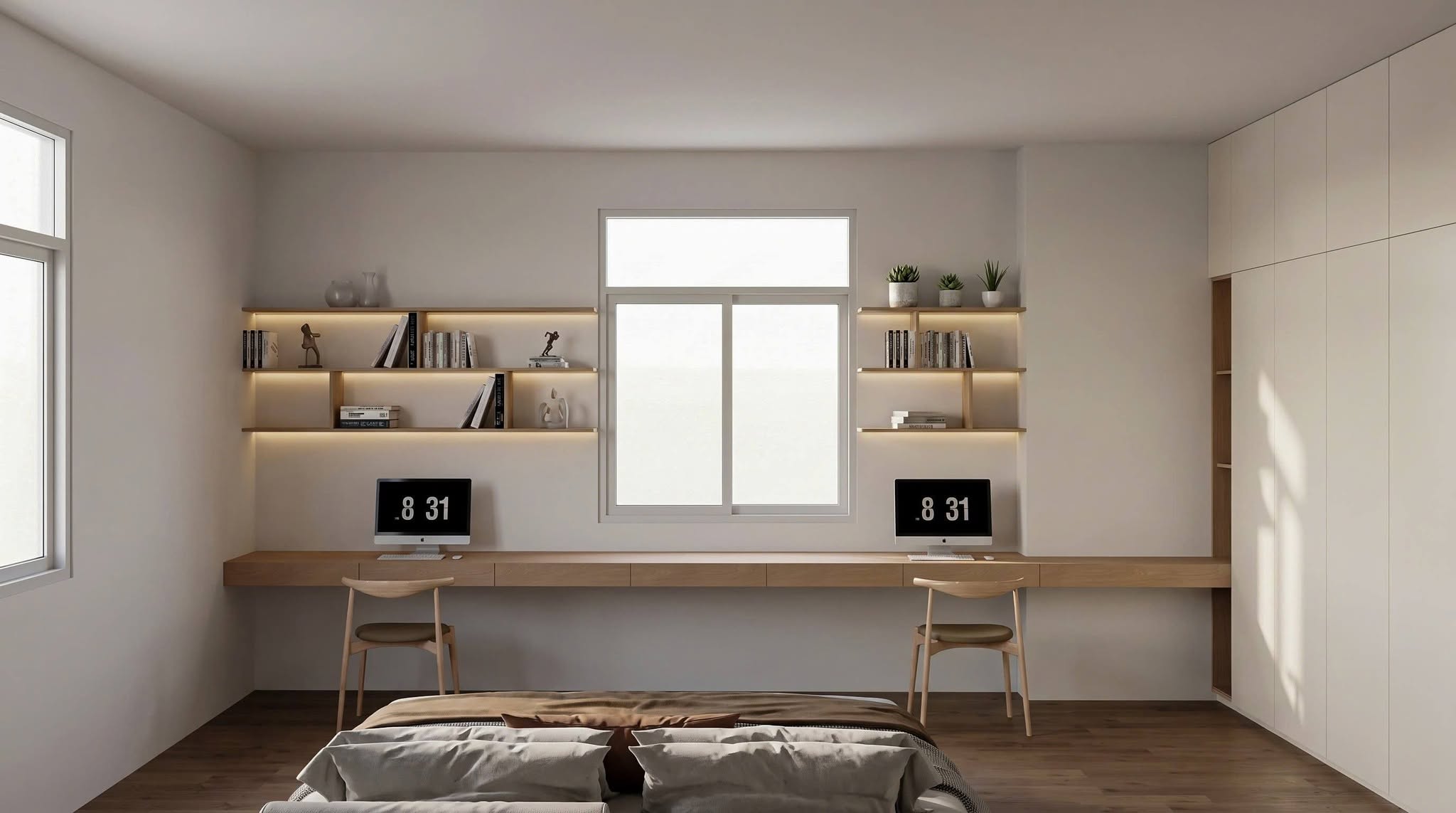
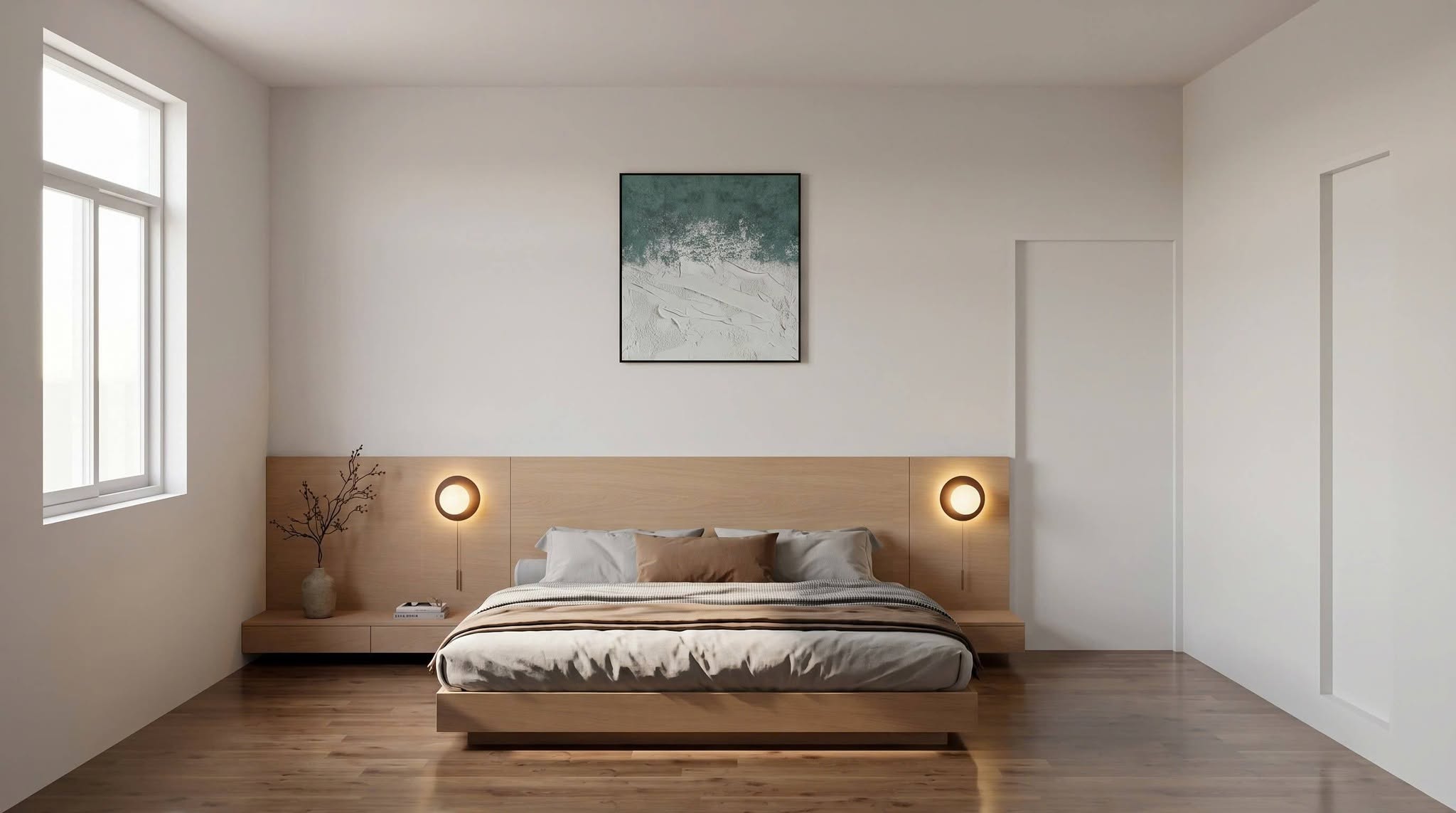
- Task light: focused light for specific activities – under-cabinet kitchen lights, desk lamps, bedside reading lights.
- Accent light: highlighting artworks, display shelves or feature walls.
- Decorative light: where the fixture itself is the object – rattan pendants, ceramic lamps, table lamps.
A good space rarely relies on one layer. Combining layers, each on its own control, lets the same room shift from bright and clear in the morning to warm and intimate at night.
Key numbers to keep in mind
- Colour temperature: 2700–3000K (warm) for bedrooms and living rooms; around 4000K (neutral) for kitchens, studies and bathrooms.
- Colour rendering (CRI): 90 or above, so timber, skin and food look true and appealing.
- Typical illuminance: around 100–300 lux for living rooms and bedrooms; 300–500 lux for kitchen worktops and desks.
- Glare control: choose fittings with deep recessed sources and avoid looking straight into a light from seats and beds.
- Dimming: the simplest way to let one space serve many moods.
Light in H+ Studio's work
In H+ projects, light is considered from the concept stage, not added at the end. We observe sun paths, trees and the family's daily routines before deciding on openings, roofs and lighting. The goal is not a brighter room, but a room with the right light at the right time and place – somewhere that feels good from morning to night.
Related articles
All articles